
The breed
Two lines, one dog — and why we breed the cross on purpose.
Most people don't realize there are two distinct Doberman lines. The American and European share the same foundation but were shaped by different goals for decades. Understanding the difference is the first step to understanding what we breed and why.
Side by side
The American. The European. The difference.
Same breed on paper. Different dogs in practice. The show ring drove the American line toward elegance; the working trials drove the European toward size, drive, and resilience. Both are excellent — they just pulled in opposite directions for fifty-odd years.
| American | European | |
|---|---|---|
| Build | Refined, elegant, show-ready | Heavier bone, more muscular |
| Temperament | Softer, sensitive, family-focused | Higher drive, working resilience |
| Best known for | Companionship, show ring | Protection sport, IGP |
| Head | Finer, chiseled | Blockier, broader muzzle |

Why we breed the cross
The working half and the home half, in one dog.
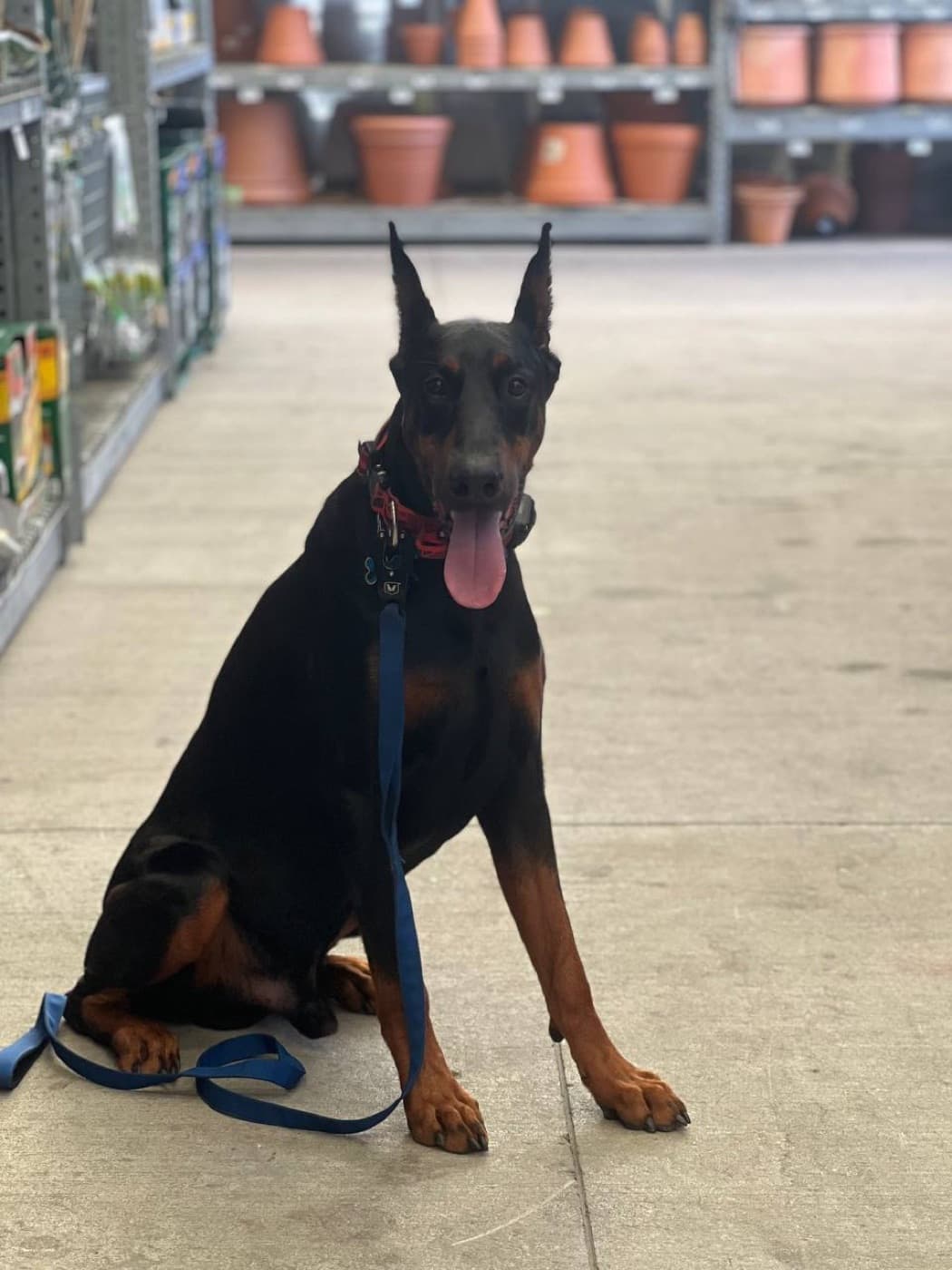
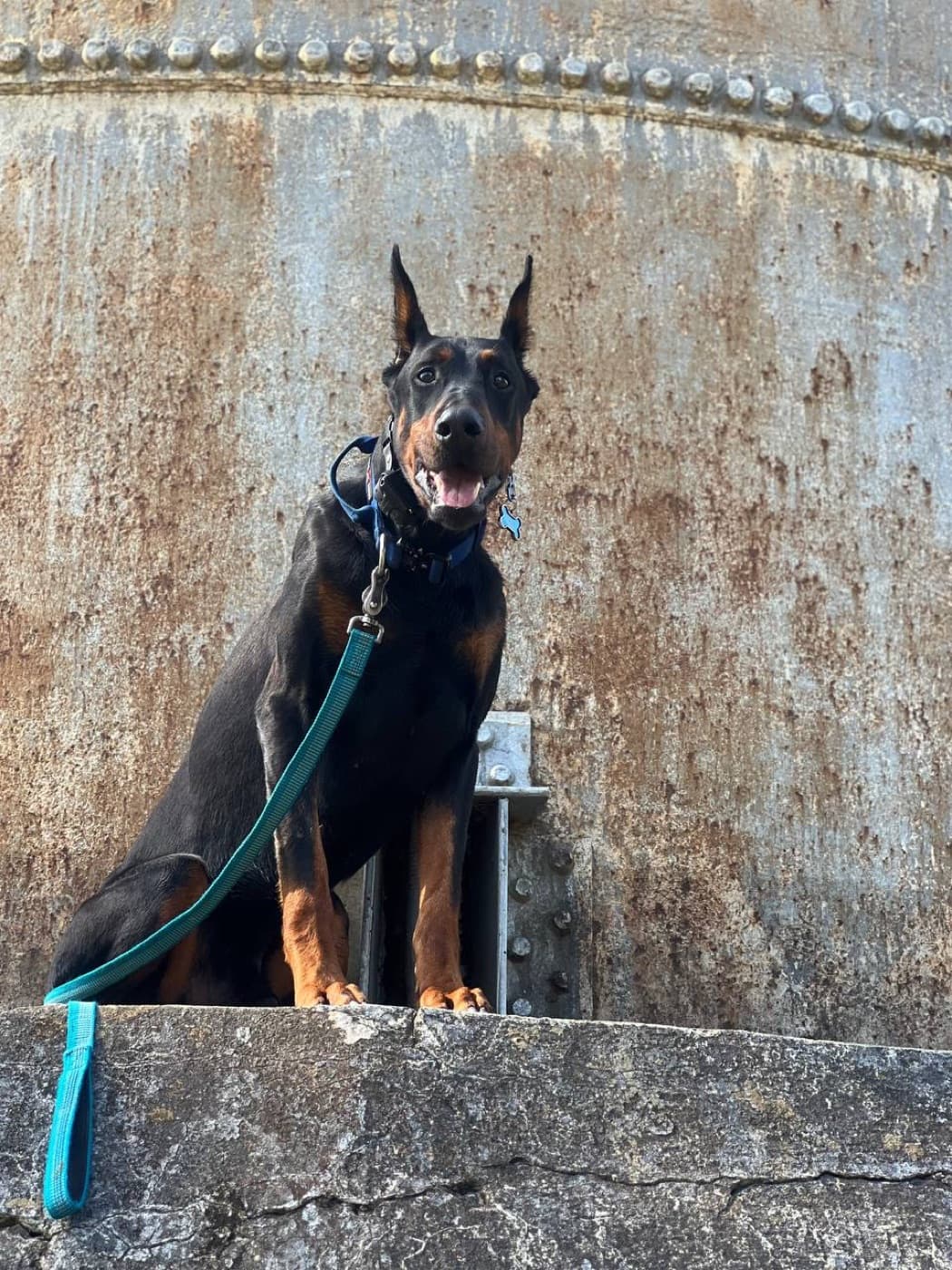
Niko's black-and-rust build and confident presence are the European side. The way he naps at your feet while you watch TV is the American side. A well-planned cross keeps both.
The genetics work in your favor too. Because the American and European lines developed separately for so long, crossing them widens the gene pool — first-generation hybrids show some of the lowest inbreeding coefficients in the breed. That matters for health and longevity.
We also pair the cross with serious DNA testing — DCM1, DCM2, vWD — because good genetics don't excuse skipping the screening. Both work together.
What you get
Six things the hybrid does better than either line alone.
Substance and an off-switch
European structure gives you a dog that carries itself. American warmth gives you a dog that settles on the couch at night. You get both in one animal.
Better genetic diversity
Because these two lines developed separately for generations, crossing them widens the gene pool. First-generation crosses tend to show some of the lowest inbreeding coefficients in the breed.
Sound in public, gentle at home
More confidence than a soft American, more manners than a sharp European. The hybrid sits comfortably in the middle — calm at the coffee shop, aware on the trail.
Longevity
Widening the gene pool supports health. Our lines average around 10.5 years [PLACEHOLDER] — that's toward the top end for a breed that historically ran shorter.
Versatility
A dog that works and a dog that lives with your family don't have to be separate animals. The hybrid handles both without being too much of either.
Paired with serious health screening
The cross helps, but we don't count on it. Every breeding pair has documented OFA and DNA status — full panels where current, parentage-clear where applicable. The genetics do more when the testing is thorough.
Health concerns we test for
Dobermans carry real breed risks. We test for all of them — and show you the results.
Dilated Cardiomyopathy (DCM)
The breed's most serious risk. We screen every parent for both DCM1 and DCM2 — and we explain what the results mean before you deposit.
von Willebrand's Disease (vWD)
A bleeding disorder with a straightforward DNA test. Both of our breeding pairs test clear.
Hips, thyroid, and more
OFA evaluations and DNA documentation on every breeding dog, with full Embark panels where current and parentage-clear status where applicable. All results available before any conversation about a deposit.
Common questions
A few things people usually ask
How long do they live?
Dobermans as a breed historically ran on the shorter side — eight to ten years wasn't unusual. Well-bred American–European crosses with good health screening tend to do better; our lines average around 10.5 years [PLACEHOLDER], which is toward the top end for the breed.
Are they good with kids?
The hybrid's American side brings a softness and patience that makes them genuinely good family dogs. They're not for every household, but a well-socialized High Point puppy that grew up with kids does well with them.
How much exercise do they need?
More than a Labrador, less than a working-line Malinois. An hour a day of real activity keeps them even-tempered. They're athletic dogs and they'll let you know if they're bored.
What's the difference between your cross and a purebred?
Purebreds are either American or European — staying within one line. We breed the first-generation cross intentionally, matching a European sire to an American dam (or vice versa) with full health testing on both. The goal is the middle: substance with manners.
Interested in a High Point Doberman? The application takes a few minutes and there's no deposit to apply.
Ready to meet your Doberman?
Tell us about your home and what you're looking for. We'll help you find the right match from our upcoming litters — no deposit to apply.